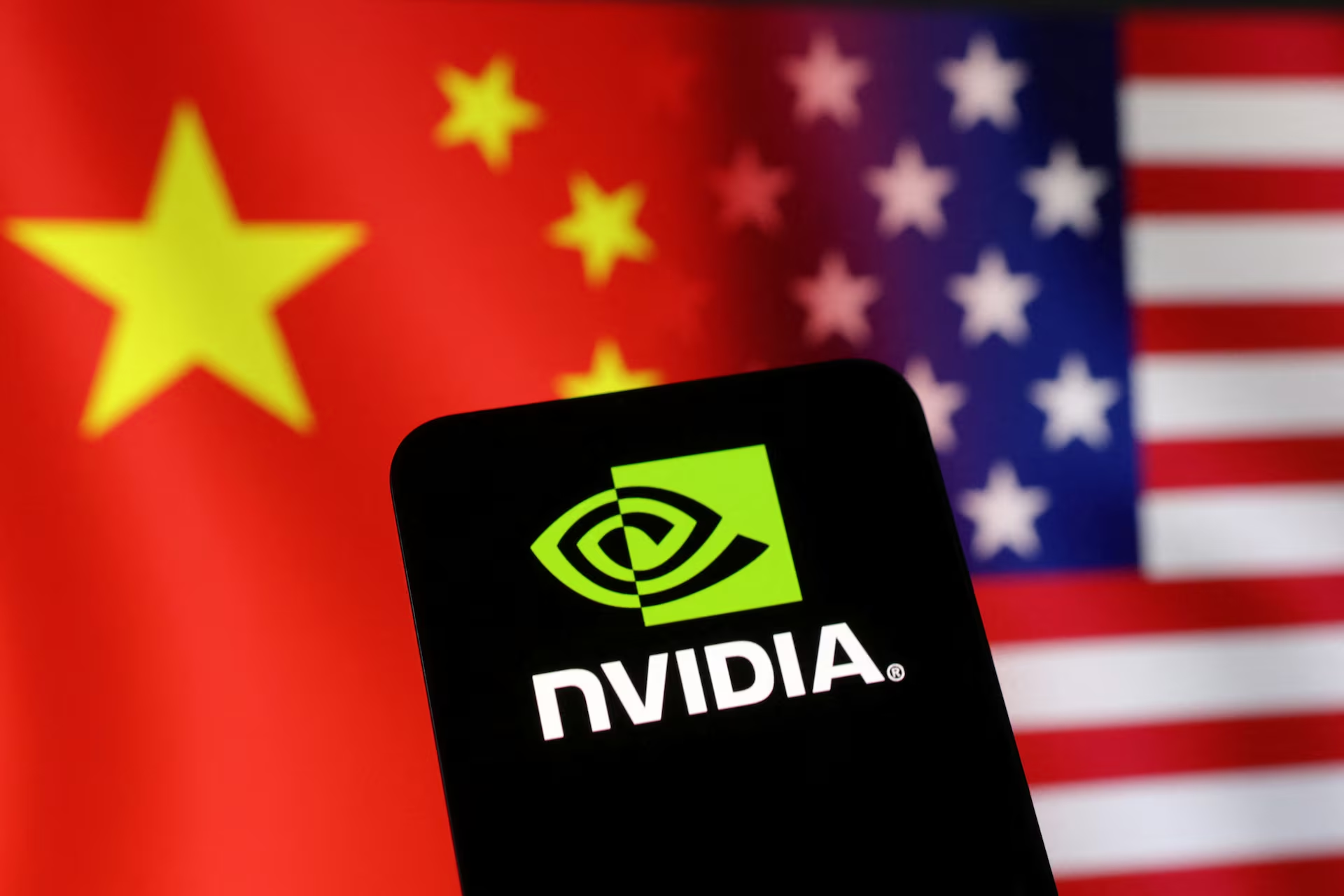

The U.S. has imposed a 25% tariff on advanced AI chips like Nvidia’s H200 and AMD’s MI325X that are produced abroad but exported from America to China—a strategic move aimed at limiting China’s access to cutting-edge AI technology while supporting domestic chipmakers who prefer selling with tariffs over losing market access entirely. The tariff exempts chips used domestically for research or defense, and comes as Chinese companies rush to place early orders while potentially reconsidering their import restrictions to avoid falling behind in AI development. While this signals America’s intent to reduce dependence on foreign semiconductor production—the U.S. currently manufactures only 10% of its own chips—the tariff itself doesn’t address the fundamental bottleneck: America’s limited domestic chip manufacturing capacity, which remains the core challenge in achieving true technological independence.
The U.S. just hit Nvidia’s AI chips with a 25% tariff