


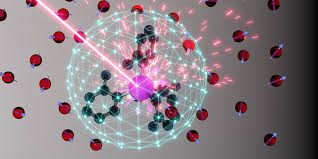
Quantum computers are the future of humanity. These computers use qubits instead of traditional bits. Qubits are made by manipulating fundamental particles of the universe such as photons, electrons, trapped ions, superconducting circuits and atoms. Many current quantum computers operate near absolute zero.
What exactly sets qubit apart:-
•Normal bits are just 1 or 0, where 1 means the bit or transistor is on and 0 means the bit or transistor is off
•Whereas Quantum bits can exist in a combination of 0 and 1 (superposition) at the same time.
•For example in a task where thousands or millions of bits are required, fewer qubits may be sufficient.
Advancements in quantum computers:-
•Some companies such as Google and IBM have already built quantum computers.
•Currently these quantum computers only have a few hundred qubits due to big storage and maintenance requirements.
•Microsoft is researching Majorana chip based qubits which aims to create more stable and scalable qubits. Microsoft is working on a •topological state of matter for more stable qubits.
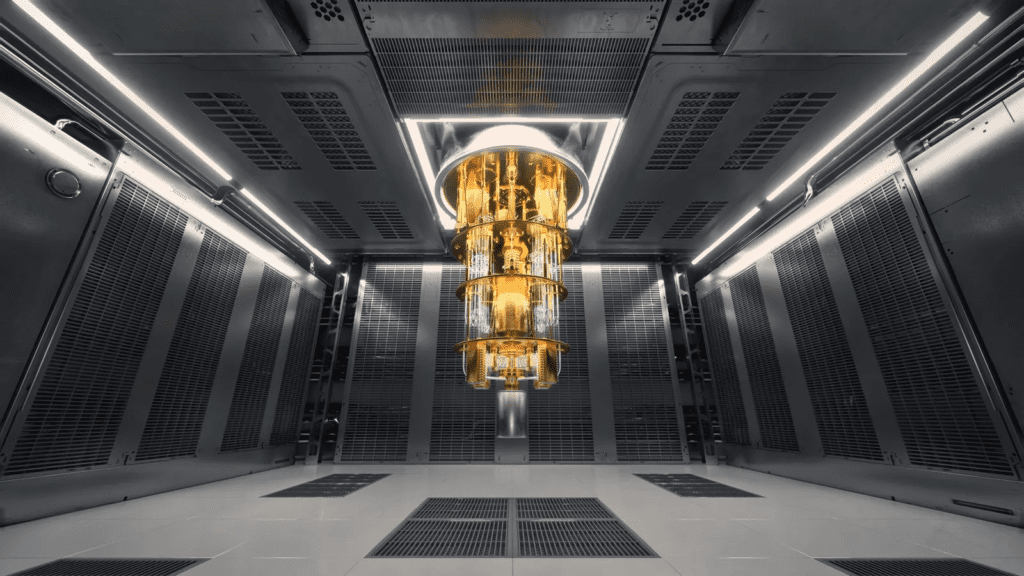
IBM’s Quantum computer:-
Security risks regarding quantum computers:-
•Current generation encryption methods rely on computational limitations. They work by overloading the device which means it will take the device millions of years to decrypt the data.
•It can only be decrypted in by the device which has the private key since it would take an impractical amount of time to decrypt without it.
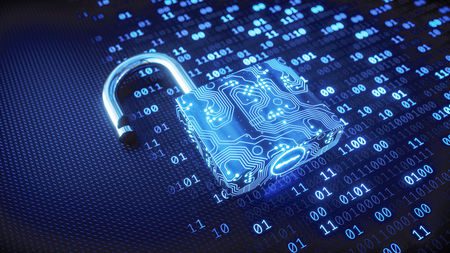
•Since the quantum computer pushes the computational limitations, this could weaken current encryption methods in the future.
•This puts our banking systems, security systems and privacy at risk.
In conclusion, the future of quantum computers is unpredictable due to hardware and ethical limitations.