

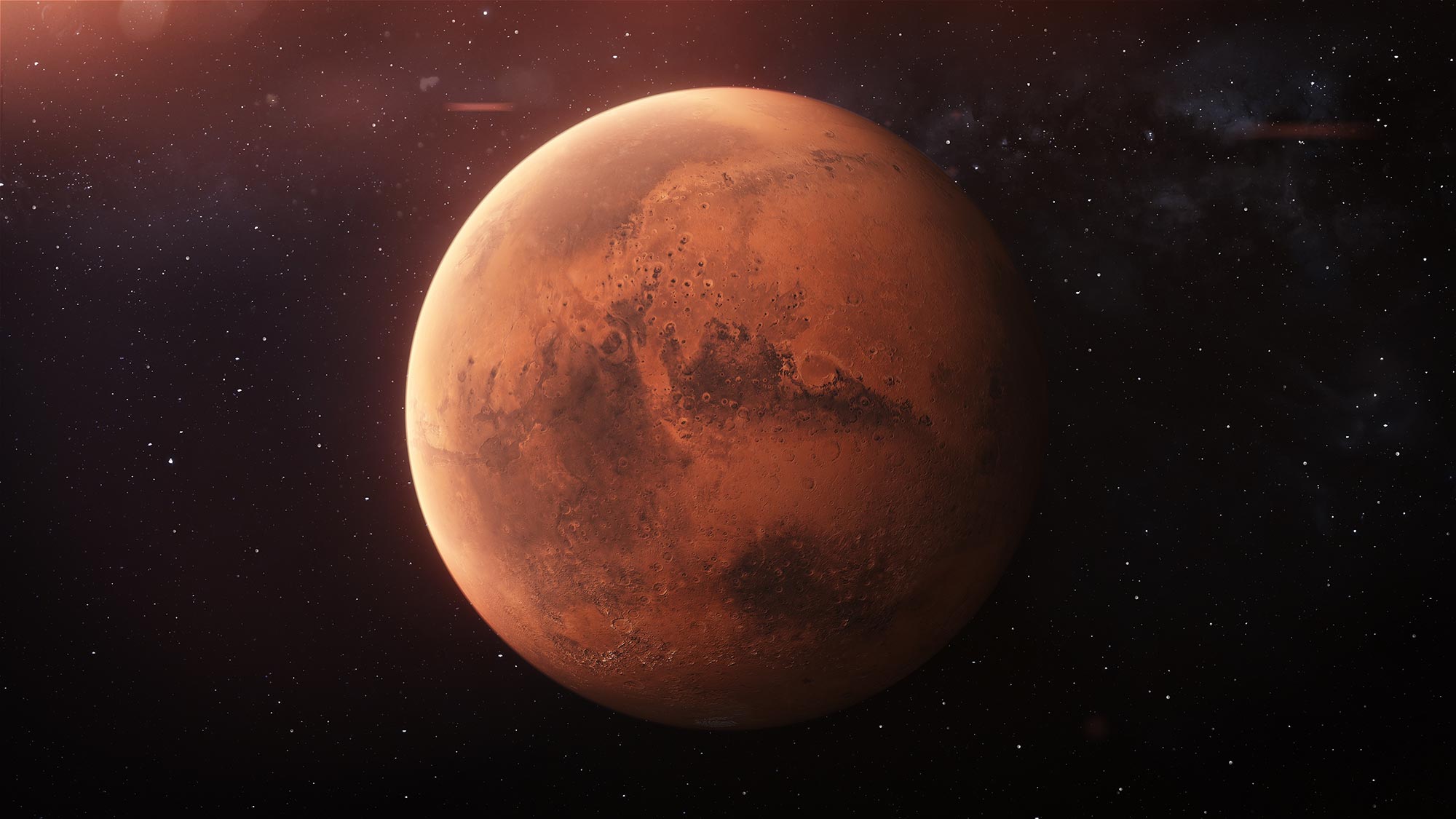
Humans have sent multiple missions to Mars, once they were able to venture to the Moon. Over the years many rovers have been sent to explore the Martian surface, which is a neighbouring rocky planet located at an average distance of 225 million km from the Earth. These rovers were sent for various tasks such as research and evidence of life, which we will discuss in this blog. Let us start from the beginning.
PrOP-M Rover(1971):-
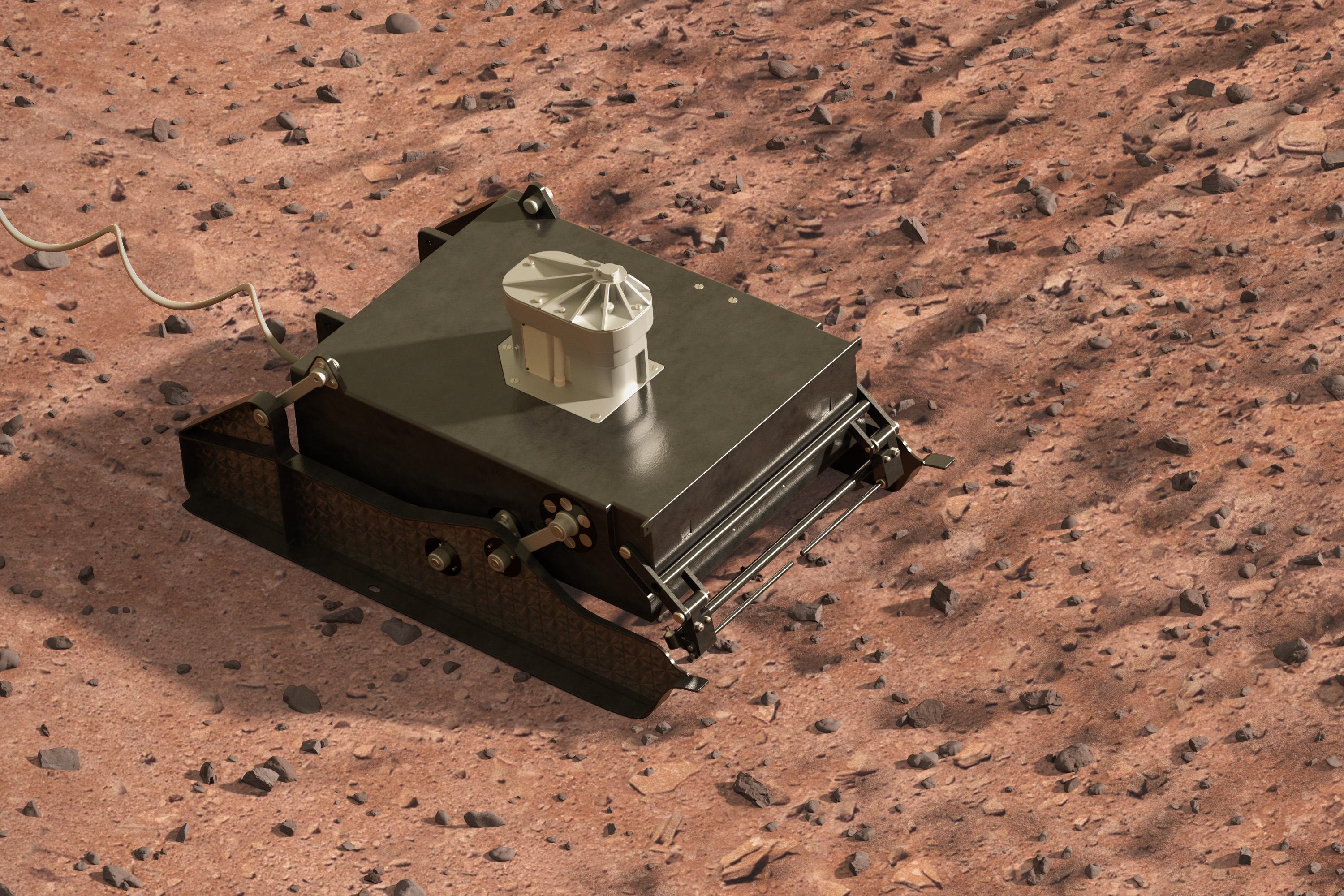
This was the first mission conducted by humans to deploy a rover on the surface of Mars for research. This was a part of the Mars 2 and Mars 3 missions by the Soviet Union in the year 1971. There were two small rovers, one for the Mars 2 mission and one for the Mars 3 mission. They were designed by the Mobile Vehicle Engineering Institute, led by Alexander Kemurdzhian. These rovers had a ski-walking type mechanism instead of traditional wheels since the scientists were unsure if the wheels would get enough traction on the Martian surface. They were only 4.5 kg in weight and walked very slowly. They were equipped with a dynamic penetrometer and a radiation densitometer to study the Martian soil and surface. Unfortunately the Mars 2 mission crashed and in the Mars 3 mission, the connection to the rover was lost just after 10 seconds of successfully landing.
Sojourner Rover(1997):-
This rover was a part of the NASA’s Pathfinder mission which successfully landed on the surface of Mars in the year 1997 and was the first wheeled rover on an astronomical body other than Earth. It far exceeded its expected lifespan which was only 7 days as this rover was active on the surface of Mars for 83 sols or 95 days. Its purpose was to test mobility, navigation and instrument performance on Mars that is to test if such missions are even possible. It covered a distance of approximately 100 m. It was microwave sized and was only 10.6 kg. The rover was powered by solar panels. Using its Alpha Proton X-ray Spectrometer (APXS) to analyse the chemical composition of Martian rocks and soil. This mission was a pioneer to all other rover missions conducted on Mars. The mission ended in September of the same year due to a loss of connection with the Mars Pathfinder Lander.

Spirit Rover(2004-2010):-
The Spirit rover was a robotic rover that operated on the surface of Mars from 2004 to 2010 greatly exceeding its original 90-day mission plan. It was a part of the mission MER-A planned by NASA and launched in the year 2003. It landed on the Gusev Crater on Jan 04 of 2004. Its main objectives were to find evidence if water ever existed on Mars, geology and assess the habitability of the planet. The rover was approximately the size of a golf cart and weighed about 185 kg. It had various instruments such as RAT (Rock Abrasion Tool), Robotic Arm (IDD), Mini-TES( a thermal spectrometer) and a panoramic camera. It had major key discoveries which include –
•Evidence of ancient water: While wandering in 2007, it came up upon pure silica which is only found on Earth near hot springs suggesting water and a more habitable environment in the past.
•Volcanic history: The Gusev crater was filled with basalt altered by water suggesting volcanic activity in the past.
•Carbonates: It discovered carbonate minerals suggesting a more neutral pH suggesting a more habitable past where mostly non habitable are acidic.
•Active weather: It gathered images of dust storms and monitored atmospheric conditions.
The rover travelled 7.73 km before getting stuck in the year 2009 and not being able to get enough traction to move. One of its front wheels also failed. In the year 2010, it was last heard after a Martian winter came due to which its solar panels were not able to generate enough heat causing the temperature to fall below −55 °C. After trying for 1 year for contact, in the year 2011 NASA declared the mission as complete.
Opportunity Rover(2004-2018):-
NASA’s Opportunity rover was a part of the mission MER-B which explored the surface of the Mars from 2004 to 2018. It is regarded as the most successful rover mission conducted by humanity on another astronomical body. It travelled a distance of 45.16 km and exceeded its 90 day lifespan. Its main objective was to study the geology of Mars, presence of water and whether it was habitable in the past. So, it landed in the Meridiani Planum region of Mars as the orbiters detected a mineral (Hematite) that typically forms in water on Earth. The rover was equipped with a suite of instruments including a panoramic camera (Pancam), miniature thermal emission spectrometer (Mini-TES), Mossbauer spectrometer, Alpha Particle X-Ray Spectrometer (APXS), microscopic imager, and a rock abrasion tool (RAT) and weighed 185 kg. It had major key discoveries which include –
•After landing on the site, it discovered small, round bluish stones rich in hematite. They are formed in acidic water, suggesting a wet environment in the past.
•The rover also found other minerals such as jarosite which indicated the presence of salt water ponds or lakes in the past.
•While exploring the endeavour crater, it discovered clay minerals and gypsum veins which suggest presence of potential drinkable water, and conductive to life flowing through underground fractures.
•In 2005, it discovered the first meteorite on Mars nicknamed “Heat Shield Rock”.
•Over the course of its journey, it explored hundreds of craters on Mars and studied them – how they formed/eroded and what minerals they contain.
In June 2018, a severe dust storm came on Mars which deprived the solar panels of sunlight and was declared not operational in 2019. The legacy of this mission and its twin, Spirit rover inspired and helped upcoming missions on Mars, and gave us many discoveries that suggest water on the Martian surface in the past. The last message from the rover, sent June 10, 2018, was interpreted as “My battery is low and it’s getting dark”.

Fun Fact:-
Mars rovers cannot be operated in real time because signals between Earth and Mars can take up to 22 minutes to travel. Instead, scientists send a pre-written sequence of instructions and the rover navigates the terrain of Mars autonomously.
Curiosity Rover(2012-present):-
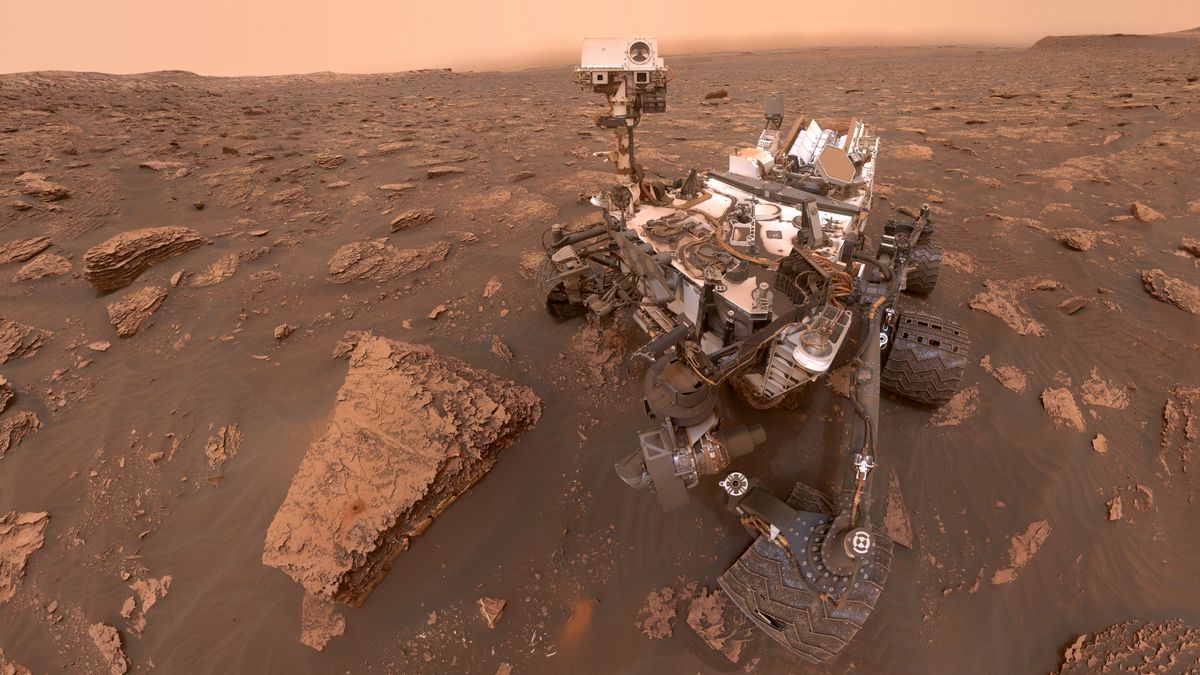
NASA’s Curiosity Rover landed on Mars’s Gale crater in the year 2012 with its primary objective being to find whether small microbial life ever existed on Mars or not by studying Martian geology and climate. It weighs over 900 kg and includes various instruments such as 17 cameras, a seven foot robotic arm equipped with a driller for sampling and a laser-induced breakdown spectroscopy. It is currently active on the surface of Mars and continues to explore for more discoveries that could change what we think of life. Instead of being reliant on solar panels for energy, it uses a Multi-Mission Radioisotope Thermoelectric Generator (MMRTG) which provides electricity using the decay of plutonium-238 – like a built-in mini nuclear battery. As of March 12 2026, the rover has traveled over 35.5 km on the surface of Mars. It has major key discoveries which include –
•It discovered that the Gale crater was once a calm lake that could support microbial life in the past.
•It detected carbon compounds, also known as the building blocks of life, in 3.5-billion-year-old layers of rock, suggesting life could have existed 3.5-billion-years in the past.
•Key Ingredients: Identified sulfur, nitrogen, oxygen, phosphorus, and carbon.
•It confirmed the existence of ancient liquid water on Mars and not just moisture lingering in the air.
•It also discovered fluctuating levels of methane indicating presence of life underground or geological activity.
•Recently discovered pure sulfur crystals, suggesting a more complex geological history.
This mission has been a huge success and continues to amaze humanity. The Curiosity rover has directly influenced the perseverance rover’s missions. Due to it being powered differently compared to opportunity and spirit, it has proved the reliability of the nuclear power system in rovers.
Zhurong Rover(2021-2022):-
Zhurong rover was part of the Tianwen-1 mission which landed successfully on the surface of Mars on May 15 2021. It was China’s first rover to achieve this and while having a life span of 90 sols, it lasted a whole year. It weighed 240 kg, it was solar powered and landed in the Utopia Planitia region of Mars. Its main objective was to study the planet’s geology, climate, and search for water/ice. It is equipped with various instruments such as Mars Rover Penetrating Radar (RoPeR) which scans over 100 m of depth of the Martian surface, Mars Surface Compound Detector (MarSCoDe) uses laser-induced spectroscopy and short-wave infrared spectroscopy to analyse minerals, and Navigation & Topography Camera (NaTeCam). It covered a distance of 1.9 km and has major key discoveries which include –
•Data from RoPeR showed that layer 10-35m deep from the surface of Mars had sediments deposited by water suggesting water in the past in Utopia Planitia.
•The rover identified hydrated silica materials in “bright-toned” rocks, indicative of a duricrust formed by groundwater or melting ice.
•Analysis of Zhurong’s data indicates that significant liquid water activity persisted on Mars until around 750 million years ago, much later than previously believed.
•It discovered that sand dunes were formed by a 70 degree wind shift suggesting climate change, potentially linked to the last ice age on Mars.
•Radar revealed irregular, polygon-shaped wedges below the surface, likely created by ancient freeze-thaw cycles.
•The rover’s radar found features consistent with dirty ice (a mixture of ice and sand) at low latitudes.
On May 2022, the rover went in hibernation so as to survive Martian winter and dust storm but did not wake up in December of the same year as planned due to accumulation of dust causing damage to parts. NASA’s Mars Reconnaissance Orbiter (MRO) confirmed that the rover did not move proving that the mission came to an end.
Perseverance Rover(2021-present):-
NASA’s Perseverance rover landed on Mars’ Jezero crater on 18 February 2021. It is the most recent rover mission conducted on Mars and its main objective is to seek signs of ancient microbial life by studying Martian geology, collecting samples and testing new technologies including MOXIE and Ingenuity. It is about the size of a small car body and is 1,025 kg. Based on Curiosity rover’s design, It has various instruments to complete its objectives which include a 2.1m robotic arm, Multi-Mission Radioisotope Thermoelectric Generator (MMRTG) for power, 23 cameras, 2 microphones, a sampling system consisting of a drill and sealed tubes for future recollection and is able to navigate on its own. As of December 2025, the rover has traveled over 39.43 km on the surface of Mars using its advanced features. It has major key discoveries which include –
•Identified rocks, such as at “Cheyava Falls”, containing potential bio-signatures and organic materials.
•It confirmed that the Jezero crater was a lake, identifying proof of a river delta.
•It discovered a massive water system or a lake system and found potential traces of ancient wave-formed beaches.
•Ingenuity Mars Helicopter: It was the first aircraft to have a control flight on another world on April 19 2021, just 2 months after landing. It lasted nearly 3 years completing 72 flights before retiring on January 18 2024 after sustaining damage to rotor in its final flight. It was powered by solar panels and became an aerial scout for the perseverance rover. It had cameras for navigation and tracking, and travelled over 10.5 km. It has achieved speeds of over 11 mph and has paved the way for future aerial vehicles on Mars.
•MOXIE (Mars Oxygen ISRU Experiment):This instrument on the perseverance rover successfully demonstrated and created 122 g of oxygen over 16 tests from 2021 to 2023 using Martian atmosphere which is useful for various tasks in the future as the created oxygen can be used as a rocket propellant, create habitable domes, etc.
The perseverance rover continues to explore Mars and discover new things which could change the way we perceive this red planet.

Another important upcoming mission is the Rosalind Franklin Rover, which is an upcoming European rover of the ExoMars mission 2028 which is planned to launch in 2028 and land on Mars in 2029. Its main purpose is to investigate present or past signs of life on Mars and the rover is targeted to land in Oxia Planum, a clay-rich, ancient, water-rich environment. It will feature a unique 2-meter drill to collect subsurface samples, protected from radiation. It is the first rover to combine deep drilling with an advanced onboard laboratory.
The rover missions conducted so far have been highly successful and have greatly inspired many people to be interested in planetary exploration. In the future, these rover missions will pave the way for crewed missions on Mars which will be a turning point for humanity.
You can also read our other blogs here