

2026 promises to be an inflection point for the industry. While we wait, here’s a look back at new milestones reached, fresh entrants joining the fray, and the debate over the future of the technology heating up. Breakthroughs ranged from affordable models to the rise of AI agents.
January

In January, Chinese startup DeepSeek introduced DeepSeek R1, an open-source LLM said to perform similarly to OpenAI’s o1 leaders but at lower costs. The launch has stirred debates about such claims and leadership in AI.
Yet, the challenge of DeepSeek did not deter U.S. tech giants from giving up.
OpenAI, a leading AI research company, announced its O3 model series in December 2024, focused on enhancing reasoning capabilities.
The O3 series consisted of the O3 and the O3-mini, which, in turn, had three compute levels: low, medium, and high.
The O3-mini was released to the public in January 2025 for better performance, enhancing the capability to do more complex tasks in coding, mathematics, and natural language processing.
Most notably, it made o3-mini available to ChatGPT Free Tier users and gave Plus subscribers higher rate limits, continuing to open up advanced AI capabilities to more types of users.
February

This competitive landscape really heated up in February as the focus shifted from safety summits to a rapid succession of major model releases. xAI challenged the status quo with the launch of Grok 3, which claimed to surpass contemporary rivals in complex reasoning and coding benchmarks.
Not to be outdone, OpenAI followed up its o3 release with GPT-4.5, a strategic “bridge” model that introduced a massive 256k token context window and significantly reduced latency.
The month also recorded specialized developments from other giants: Anthropic released Claude 3.7 Sonnet to fine-tune instruction-following, while Google DeepMind unveiled “AI Co-scientist,” a multi-agent system designed to accelerate the scientific discovery process.
March


In March, Google released Gemini 2.5, its most sophisticated AI model, where the Pro Experimental version outperformed rivals in coding and reasoning benchmarks. The update included Canvas, an interactive workspace for collaboration.
OpenAI released the Responses API, Agents SDK for multi-agent workflows, and the 4o Image Generation model, which improved text rendering and handled up to twenty objects per prompt. Due to high demand, free user access was briefly paused.
Microsoft refreshed its productivity suite to introduce new reasoning agents: Researcher and Analyst for Microsoft 365 Copilot. These agents automate report writing and data analysis, respectively, with complementary tools for security tasks.
Anthropic enhanced Claude with real-time web search, direct citations, and efficiency features to lower operational costs. The developer console was also improved to allow for better collaboration and support for high-level reasoning tasks.
April
In April, OpenAI enhanced the developer ecosystem by adding the gpt-image-1 model in the API for advanced image generation beyond what ChatGPT can achieve. It also expanded its lineup with variants of GPT-4.1 and o3 and o4-mini reasoning models, and released Codex CLI and upgraded ChatGPT’s memory with user-controlled privacy features.
Google underscored premium creative AI by introducing Veo 2, a video generation model that can create short cinematic clips. It also integrated the reasoning abilities of Gemini 2.5 more widely, introducing Canvas for real-time collaboration over content and code.
Microsoft reworked Copilot into a more personalized AI companion that remembered user preferences and context. New tools to make AI proactive and seamlessly embedded into the workflows of everyday life included Deep Research, Actions, and Vision.
Anthropic updated this with a new Research feature and deepened Google Workspace integration for contextual productivity. The company also debuted its Claude for Education, including its Learning mode to encourage critical thinking through guided, Socratic-style interaction.
May
In May, Anthropic expanded its platform by releasing Claude Opus 4 and Claude Sonnet 4. These are models built for long-running tasks, sustained reasoning over hours. Opus 4 is optimized for advanced coding and complex problem-solving. Sonnet 4 strikes a balance between efficiency and performance.
With that release, Anthropic also introduced extended thinking with tool use, parallel tool execution, general availability of Claude Code, new API capabilities like code execution, MCP connectors, Files API, prompt caching, and added native web search to allow Claude to fetch, process, and cite information in real-time.
Meanwhile, OpenAI introduced Codex, a cloud software engineering agent that can perform multiple development tasks simultaneously in an isolated environment.
Codex was launched as a research preview for Pro, Team, and Enterprise users, touting traceability through line-by-line, verifiable logs and test outputs that let developers confidently review changes, revise, and integrate them.
June
In June, Google expanded Gemini’s developer tooling by adding Agent Mode to Android Studio, allowing developers to describe high-level goals that the agent can plan and execute, like fixing build errors, migrating resources, adding dark mode, or generating new screens from screenshots.
Review and feedback options help keep developers in control, with an optional auto-approve mode for rapid iteration.
It updated the platform and pricing on a wide set of dimensions: adding Deep Research and Webhooks to the API; introducing prompts as a reusable API primitive; and making the o3-pro model available at significantly reduced costs.
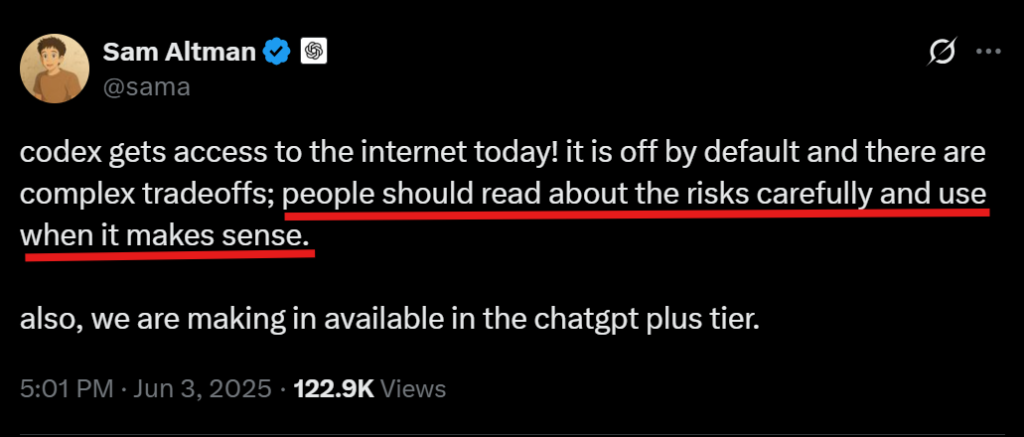
Meanwhile, Codex saw major upgrades such as optionally allowing internet access to install dependencies or execute an external test, and started expanding availability to ChatGPT Plus users, furthering OpenAI’s march toward agent-driven, scalable software development.
Anthropic expanded its ecosystem to allow developers to build, host, and share Claude-powered apps directly on its platform. Users log in with their own Claude account, and API usage counts against their subscriptions, eliminating hosting overhead and making Claude-based applications easier to distribute.
July
In July, Perplexity introduced Comet: an AI-powered browser based on Chromium that directly embeds AI into web navigation. First only available to the most premium subscribers, the browser was later released for free, marking a movement toward AI-native browsing experiences.
Google packaged several major advances across creativity, accessibility, and autonomy into a broad push toward AI everywhere.
It has introduced Opal, an experimental no-code tool that lets users build mini AI apps with natural language and visual workflows, and released Imagen 4 and Veo 3 to push generative media forward with more realistic images, higher quality video, and even integrated sound through its Flow AI filmmaking app.
Simultaneously, at-device intelligence expanded with Google’s Gemma 3n: a lightweight multimodal model created to run on mobile and edge devices, even with minimal hardware; it also introduced DeepMind’s Gemini Robotics-enabled robots that can learn complex tasks from a limited number of demonstrations and operate autonomously without leaning on the cloud.
OpenAI continued to expand the agentic capabilities of its models by introducing an agent mode into ChatGPT, making it capable of independently managing complex, multistep user requests.
By combining Operator for website interaction with deep research for synthesis and analysis, ChatGPT is able to browse, click, filter, and act on web content while seamlessly transitioning from conversation to execution within a single chat.
Anthropic fortified its enterprise tooling by adding a new analytics dashboard to Claude Code, granting teams insight into how AI is used across development workflows.
The dashboard keeps track of metrics such as code acceptance rates, activity levels, and spending patterns that help organizations assess productivity, developer satisfaction, and areas for improvement.
August

In August, OpenAI followed up with a run of interrelated updates, led by the launch of GPT-5, which brought noticeable quality improvements in complex coding, large-scale debugging, and front-end design.
Alongside this, GPT-4o was added as a legacy option in ChatGPT, the GPT-5 model picker introduced Auto, Fast, and Thinking modes, and Plus and Team users received higher message limits-a reflection of the wider push toward user-configurable performance and everyday reliability.
Google continued to expand its AI spectrum at both ends, releasing Gemma 3 270M, a small and efficient model built for high-volume, task-specific workloads where speed, cost, and privacy are critical.
At the research frontier, Google DeepMind launched Genie 3, a model capable of generating realistic, interactive environments with modeled physical properties, predestined for training and evaluating AI agents in rich, simulated worlds.
Microsoft continued to advance the state of AI-assisted development with the August update to Visual Studio 2022, directly integrating GPT-5 into the IDE and making MCP support generally available.
The update also enhanced Copilot Chat with stronger semantic code search and added support for connecting models from OpenAI, Google, and Anthropic, positioning Visual Studio as a more flexible, multi-model AI development environment.
Anthropic released Claude Opus 4.1, further solidifying the model’s research and data analysis capabilities and boosting its performance on SWE-bench Verified. Available across paid Claude plans, Claude Code, and major cloud platforms, the company hinted that wider-ranging improvements across its model line will be on its way.
September

In September, Anthropic reset expectations for AI-assisted programming when it released Claude Sonnet 4.5, calling it by far the strongest coding model and agent-building system to date.
The model attained 77.2% on SWE-bench, besting previous models of Claude as well as those from competitors like GPT-5, GPT-5 Codex, and Gemini 2.5 Pro, and also topped the OSWorld benchmark for real-world computer tasks.
Anthropic said it was extremely versatile, in that Sonnet 4.5 can toggle between near-instant responses and transparent step-by-step reasoning depending on the task.
OpenAI released a series of interconnected updates for both ChatGPT and Codex, while also releasing a newer video generation model, SORA 2, featuring improved realism, synchronized audio, and a social “Cameo” feature for users to insert themselves into videos.
Business subscribers of ChatGPT added shared projects, enabling multiple users to collaborate on shared files and instructions, while new connectors to tools such as Gmail, Outlook, GitHub, and Dropbox provided a context-aware response.
On the developer side, Codex added GPT-5-Codex, a variant of GPT-5 trained specifically for real-world software engineering tasks, among ongoing improvements like the Codex CLI, IDE extensions, and even more advanced code review capabilities that were pushing Codex toward its aspiration of being a true AI teammate for engineering teams.
Google continued embedding AI deeper into everyday software, integrating Gemini directly into Chrome as a browsing assistant capable of answering questions about articles, extracting references from videos, and suggesting follow-up searches.
AI Mode from Google Search is also being tied into the Chrome address bar, while AI-driven safety features, like scam detection, smarter auto-fill, and security warnings, are being expanded; Google reports significant reductions in spam and scam notifications thanks to the changes.
October
In October, Anthropic continued to flesh out its Claude ecosystem by rolling out long-term memory to all paid users, extending its availability after launching for Team and Enterprise customers.
This feature allows Claude to store details from projects and user preferences across sessions, so that users can maintain context with fewer repetitive setups and perform continuous and cumulative workflows over time.
The company released Claude Haiku 4.5, a model for fast applications like real-time chat and coding. Haiku 4.5 codes as fast as Sonnet 4, but costs one-third as much and runs twice as fast. Anthropic said Sonnet 4.5 remains its top model for complex coding and tasks.
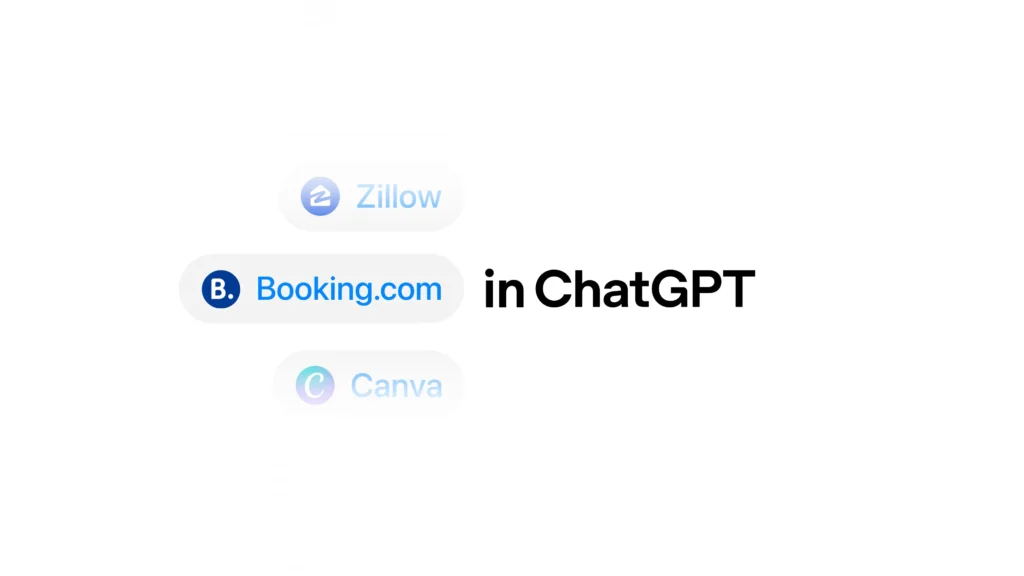
OpenAI took a step closer to making AI work together. At DevDay, the company announced ChatGPT Apps and an SDK for developers build apps inside ChatGPT.
Apps from Booking.com, Canva, Spotify, and Zillow can be used in conversation or appear automatically. OpenAI also introduced AgentKit for building workflows and made Codex available to everyone.
November

In November, Anthropic further developed high-end reasoning capabilities with the release of Claude 4.5 Opus, the most capable version to date.
New improvements over the previous version include significant complex reasoning, agentic tool use, computer interaction, and the ability to solve novel problems; early testers have stated that it handles ambiguity and multi-system bugs with little guidance from humans.
Anthropic also introduced an effort parameter to the Claude API, which allows developers control over how much computation the model applies. The model uses fewer tokens without losing performance.
OpenAI updated ChatGPT with GPT-5.1 models and new controls. Users can choose a tone: Default, Friendly, or Efficient. GPT-5.1 Thinking adjusts reasoning for complex tasks, producing clearer responses with less jargon.
Apple is close to a $1 billion deal with Google to integrate Gemini AI into Siri. The deal will fuel planning, summarization, and reasoning for Siri, dubbed Linwood, on Apple’s Private Cloud Compute infrastructure. This deal marks a shift for Apple, positioning Gemini as a temporary solution until its own model is ready.
Google introduced Gemini 3, its new flagship multimodal AI model, which Sundar Pichai called “our most intelligent model,” moving the needle on reasoning, multimodal understanding, and agentic capabilities and bringing those enhancements to products such as the Gemini app, AI Mode in Search, developer tooling, and Vertex AI. Gemini applies more context and robust reasoning to real-world tasks.
December
GPT-5.2 is the latest frontier-grade model in the GPT-5 series, offering stronger agentic and long context perfomance compared to GPT-5.1. It uses adaptive reasoning to allocate computation dynamically, responding quickly to simple queries while spending more depth on complex tasks.
Built for broad task coverage, GPT-5.2 delivers consistent gains across math, coding, sciende, and tool calling workloads, with more coherent long-form answers and improved tool-use reliability.
As of 25th December, the AI world feels unusually quiet—a brief calm before the storm. After a year packed with breakthroughs and rapid innovation, it’s clear this pace isn’t slowing anytime soon.
We’ll be right here at Spacerock bringing you the latest advancements in AI as they unfold. Until then, happy holidays and see you in the next wave 🚀✨